
What Makes an Art Lesson Senior-Friendly?
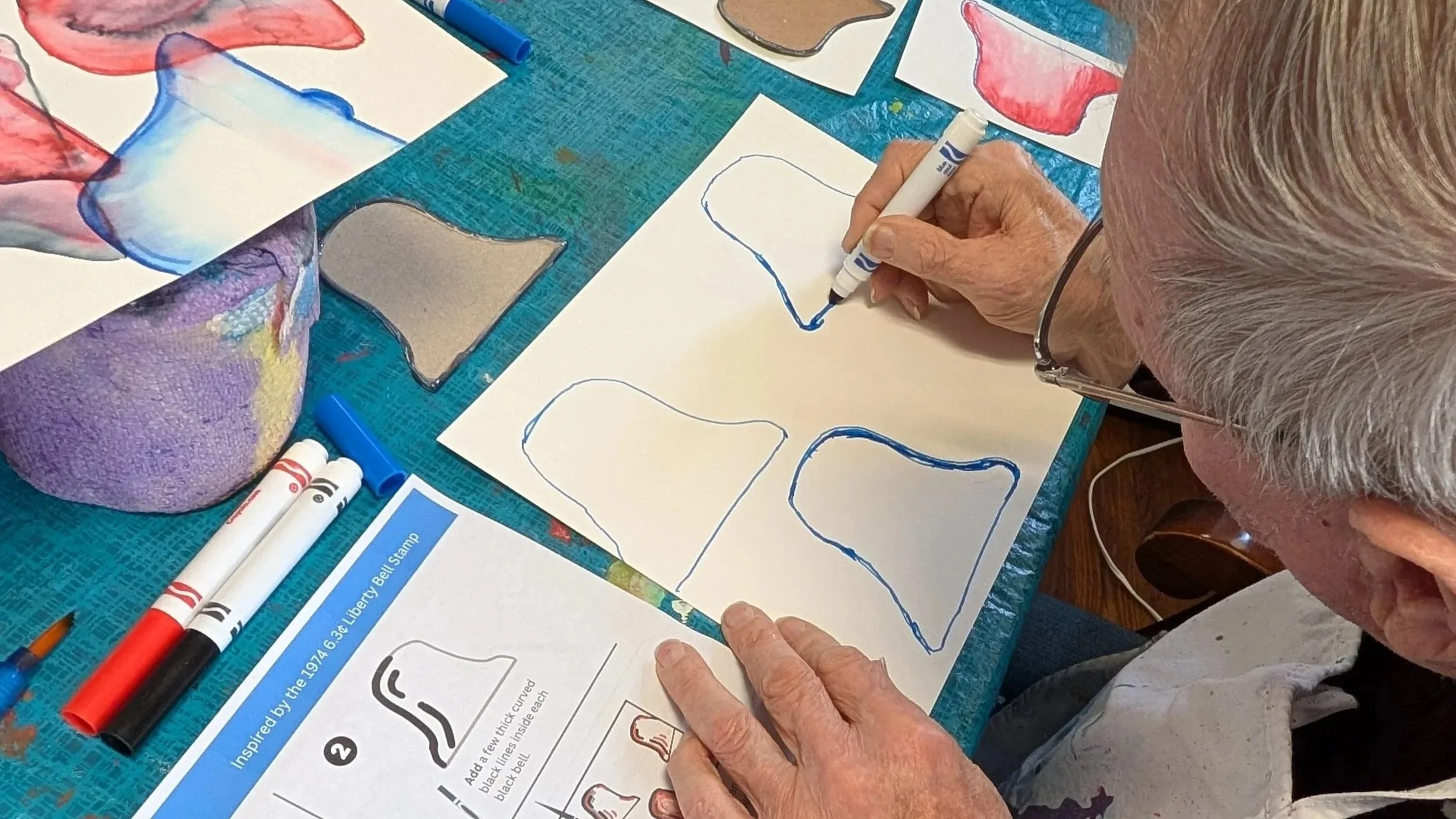
Above: An artist working with art materials and participant lesson guide close at hand.
Insights from teaching seniors in care communities
A random cute painting project found on a Pinterest board is not automatically a good art experience for older adults.
Over the past ten years teaching art in assisted living, skilled care, and memory support communities, I have learned that successful art activities require much more than a pretty finished sample. The most effective lessons are thoughtfully designed around the abilities, interests, and life experiences of the people participating.
Here is what really matters when choosing an art lesson for older adults.
1. Meaningful Themes Create Engagement
Adults want to create art that connects to something meaningful.
The most successful projects often include themes related to nature, history, geography, personal memories, holidays, local culture, or lifelong interests. A lesson becomes more engaging when participants can connect it to their own experiences and stories.
When a project includes meaningful subject matter, the conversation often extends far beyond the art table.
2. The Process Matters More Than the Product
A beautiful sample project is helpful, but the goal is not to create identical artwork.
Successful art experiences encourage choice, exploration, and personal expression. Participants should have opportunities to make decisions, solve problems, and create something uniquely their own.
A successful class is measured by engagement, confidence, and self-expression—not by how closely the artwork matches a sample.
3. Different Abilities Require Different Approaches
In most care communities, participants bring a wide range of abilities and life experiences to the art table.
Some individuals may have experienced vision changes, tremors, limited range of motion, or varied cognitive abilities.
Others may be at the facility for short-term rehabilitation, while some arrive with years of creative experience and are looking for a new challenge.
Effective lessons need to support this wide range of participants.
A well thought out lesson provides multiple ways to participate so that individuals with differing abilities and interests can engage at a level that is comfortable, meaningful, and successful for them.
The goal is not to lower expectations. The goal is to remove unnecessary barriers to participation while providing opportunities for challenge, learning, and creative expression.
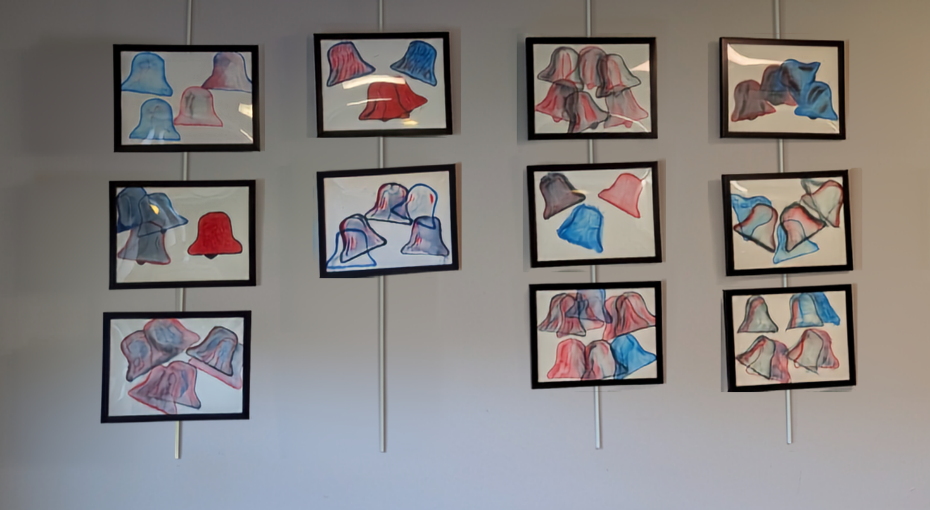
Let Freedom Ring: a field-tested lesson developed using the principle of Art made simpler, not simple.
4. Instructions Need to Be Clear and Flexible
The people facilitating activities are often balancing many responsibilities.
In my experience, some Activity Professionals have extensive creative backgrounds while others may feel completely uncomfortable leading an art activity. Both deserve resources that help them succeed.
Simple step-by-step guidance, visual examples, preparation tips, and troubleshooting suggestions help staff feel more confident leading creative experiences.
Not every facilitator has an art background, and they shouldn't need one in order to offer meaningful creative opportunities. Clear instructions help reduce uncertainty and allow staff to focus on supporting participants rather than figuring out the project themselves.
A successful lesson should support both the participant and the person facilitating the activity.
5. Materials Influence Success
The materials chosen for a project can make the difference between success and frustration.
Questions I routinely consider include:
Can the materials be easily grasped?
Are they easy to clean up?
Do they produce visible results quickly?
Can they be adapted for varying levels of dexterity?
Will participants feel successful using them?
Sometimes the best material is not the most sophisticated one—it is the one that allows people to fully participate.
6. Respect for Learners Comes First
Older adults are adults.
Art activities should be age-appropriate, meaningful, and respectful. Participants bring decades of life experience, knowledge, and creativity to the table.
The goal is not simply to keep people busy. The goal is to provide opportunities for learning, self-expression, accomplishment, and connection.
A successful lesson creates space for creativity while also encouraging meaningful connections between participants, staff, family members, and care partners.
7. Connection Builds Community
Art classes provide opportunities for conversation, shared experiences, encouragement, and connection.
Some participants come for the project. Others come for the social interaction. Both outcomes matter.
When developing a new project, I ask:
Is the topic meaningful?
Can it be adapted for different abilities?
Will participants have opportunities to make choices?
Can staff facilitate it with confidence?
Does the process encourage success?
Is it respectful of the learners involved?
If the answer is no to any of those questions, the lesson needs more work.
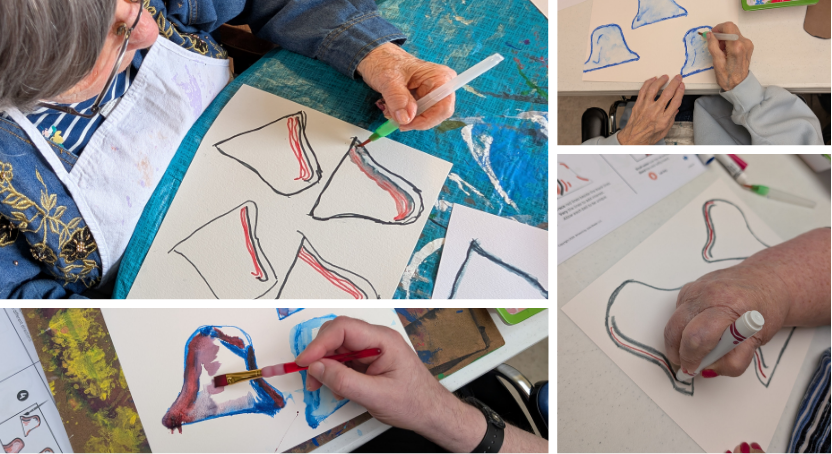
Art session participants value expressing themselves by making their own creative decisions.
Why Field Testing Matters
Every Caregiver's Artbox lesson is developed from real classes taught with older adults in assisted living, skilled care, and memory support settings.
Field testing reveals things that cannot be learned from a finished sample alone: where participants struggle, which directions need clarification, what adaptations are helpful, and where meaningful conversations naturally emerge.
The finished artwork is important.
The experience of creating it is even more important.
When older adults are given meaningful subject matter, appropriate materials, thoughtful support, and the freedom to make creative choices, art becomes more than an activity. It becomes an opportunity for learning, self-expression, confidence, and connection.